
An .ADF file is most commonly an ACT! CRM database file, created by the ACT! application to hold contact records and related business information in a structured form. Inside these files, ACT! stores key details such as names, phone numbers, email addresses, company information, notes, and interaction history so that sales and support staff can quickly look up and manage customer relationships. In many modern installations, the ADF file works in conjunction with a separate log or support file, yet ACT! presents it as the primary database, handling all low-level storage details behind the scenes. Since the layout of ADF files is specific to the ACT! CRM platform, attempting to modify them outside of ACT! risks damaging the customer tables and indexes, potentially making the database unreadable. If direct access through ACT! fails, using a general-purpose viewer such as FileViewPro can be useful for confirming that the file is an ACT! Data File, inspecting whatever information can be safely read, and assisting you in troubleshooting or planning a move to another CRM or database system.
Most modern programs you interact with every day, including social networks, online banking platforms, email clients, and business management tools, depend on database files running quietly in the background. At the simplest level, a database file is a structured container that stores collections of related data so software can save, search, update, and organize information efficiently. Unlike plain text documents or simple spreadsheets, database files are built around strict structures, indexing methods, and access rules so that thousands or even millions of records can be handled quickly and reliably.
Database files have their roots in early enterprise computing, when organizations in the 1950s and 1960s began shifting from paper documents to structured data stored on magnetic media. Early database systems often used hierarchical or network models, arranging data like trees of parent and child records connected by pointers. This style of database could handle known workflows, but it made it challenging to restructure data or add new relationships over time. The landscape changed dramatically when Edgar F. Codd presented the relational model in the 1970s, shifting databases toward table-based structures governed by clear mathematical foundations. From that concept grew relational database management systems like IBM DB2, Oracle, Microsoft SQL Server, MySQL, and PostgreSQL, all of which use proprietary database file formats to store structured data that can be queried with SQL.
Over time, the designs of database files themselves grew more advanced and specialized. Many early relational engines stored user data, indexes, and system information together inside a few big proprietary files. Later generations started dividing data structures into multiple files, isolating user tables, indexes, transaction logs, and temporary storage so they could be tuned more precisely. At the same time, more portable, single-file databases were developed for desktop applications and embedded devices, including formats used by Microsoft Access, SQLite, and many custom systems created by individual developers. Even if you never notice them directly, these database files power business accounting tools, media libraries, contact managers, point-of-sale systems, and countless other software solutions.
Engineers building database software must overcome multiple technical hurdles as they design the structure of their database files. A key priority is ensuring that information remains consistent after crashes or power outages, so most systems maintain transaction logs and recovery data alongside their main database files. They also must handle concurrent activity, letting multiple sessions read and update data simultaneously while still keeping every record accurate and conflict-free. Within the database files, indexes function as smart roadmaps that point queries toward specific records, dramatically reducing the need for full-table scans. Depending on the workload, database files may be organized in columnar form for fast reporting and data warehousing, or in traditional row-based layouts focused on rapid transactional updates and integrity.
Database files are used in advanced scenarios that go far beyond simple record keeping for a single application. For data warehouses and business intelligence platforms, very large database files store years of history from different sources, enabling complex trend analysis, interactive dashboards, and predictive models. Geographic information systems rely on specialized database files to store spatial data, map layers, and detailed attributes for points, lines, and regions. If you have any sort of questions concerning where and ways to make use of ADF file online tool, you can call us at our site. Scientists and engineers employ database files to preserve lab measurements, simulation data, and sensor streams, making it possible to search and cross-reference very large datasets. Even modern "NoSQL" systems such as document stores, key-value databases, and graph databases still rely on underlying database files, although the internal structures may look quite different from traditional relational tables.
The history of database files also mirrors the broader movement from local storage toward distributed and cloud-based systems. Historically, one database file or set of files would sit on a single host machine, whereas modern cloud databases break data into segments replicated and spread across many servers. Despite this distribution, every node in the cluster continues to maintain its own set of files, often using log-structured or append-only techniques that later reorganize data in the background. Newer file formats also take advantage of SSDs and high-speed networked storage, focusing on patterns that reduce latency and make better use of modern hardware. Yet the core idea remains the same: the database file is the durable layer where information truly lives, even if the database itself appears to be a flexible virtual service in the cloud.
With different vendors, workloads, and platforms, it is not surprising that there are countless database file extensions and unique storage formats in use. Certain database file types are openly specified so other software can read them, but many are proprietary and designed to be used only by the original application. This mix of open and proprietary formats often leaves users puzzled when they encounter strange database extensions that do not open with familiar tools. Depending on the context, a database file might be an internal program component, a self-contained data store that you can browse, or a temporary cache that the software can safely rebuild.
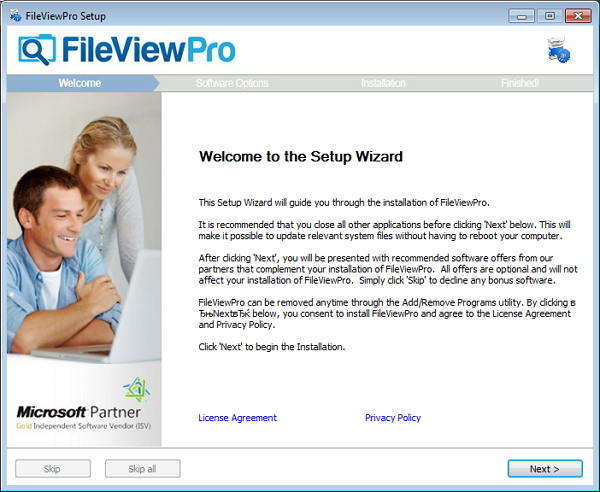
In the future, database file formats will probably grow more specialized and efficient, adapting to new hardware and evolving software patterns. Modern formats tend to emphasize higher compression ratios, lower query latency, improved memory usage, and stronger protections for data spread across many nodes. At the same time, organizations frequently move data between systems, upgrade software, and mix on-premises databases with cloud services, making interoperability and migration increasingly important. In this environment, utilities that can open, inspect, and sometimes convert database files are extremely valuable, especially when documentation is limited or the original application is no longer available.
For most users, the key takeaway is that database files are highly organized containers, not arbitrary binary junk, and they are engineered to deliver both speed and stability. That is why users should treat these files with care, keep regular backups, and use dedicated tools instead of generic editors whenever they need to look inside a database file. With a utility like FileViewPro, users can often determine what kind of database file they are dealing with, see whatever information can be safely displayed, and better understand how that file relates to the applications that created it. From occasional users to IT professionals, anyone who knows how database files function and how to interact with them is better prepared to protect, migrate, and make use of the information they contain.