
Understanding how particle size evolves during chemical reactions is critical for optimizing industrial processes, improving material properties, and ensuring product consistency. Standard analytical approaches including sieving and scattering methods offer population averages yet miss critical spatial and temporal details of particle behavior.
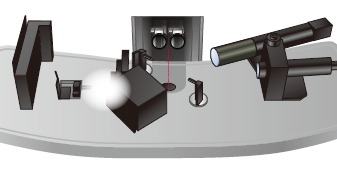
Imaging techniques have emerged as powerful tools to track particle size changes with high precision, offering direct visualization of morphological transformations as reactions unfold. High-resolution microscopy, including optical, scanning electron, and atomic force microscopy, enables researchers to observe individual particles before, during, and after chemical transformations.
Time-lapse imaging allows for the continuous recording of particle dynamics, revealing nucleation events, growth patterns, aggregation behavior, and dissolution rates. Imaging of crystallization reveals the sequential formation of nuclei, their anisotropic development, and fusion into polycrystalline aggregates, elucidating the reaction pathway.
Recent advances in in situ imaging systems have integrated environmental chambers with microscopes to maintain controlled conditions such as temperature, pressure, and solvent composition during observation. This capability is especially useful for reactions that occur in liquid or gas phases, where traditional sampling methods might alter the reaction environment.
Machine learning algorithms now enhance the analysis of imaging data by automating particle detection, segmentation, and size measurement across thousands of frames. Algorithms can distinguish between particles of similar size, identify transient aggregates, 動的画像解析 and correlate size changes with reaction progress indicators such as pH or concentration shifts.
The application of imaging-based tracking extends to pharmaceutical manufacturing, where particle size affects drug solubility and bioavailability. Imaging-guided design is revolutionizing drug formulation by enabling tailored particle architectures that enhance dissolution kinetics.
One challenge remains: ensuring that imaging itself does not interfere with the reaction. Beam-induced damage, thermal stress from illumination, and charge accumulation can distort native particle behavior.
As imaging technologies continue to evolve, their integration with spectroscopy and other analytical methods will further deepen our understanding of particle evolution during chemical reactions. The ability to visualize and quantify these changes in real time transforms qualitative observations into actionable data.